

Two of the most common and specialized semi-trailers used for these purposes are flatbed trailers and lowboy (low bed) trailers. While they might appear similar at first glance, their structural design, loading methods, payload capacity, height clearance, and use cases differ significantly.

15
Nov
Removable gooseneck trailers, commonly known as RGN trailers, are among the most important tools in the heavy-haul transportation industry. Since their introduction in the late 1950s, these trailers have played a vital role in moving oversized, tall, and self-powered machinery that cannot be transported using standard equipment. Their unique structure…

05
Nov
A 40 ft trailer is one of the most widely used transport solutions in the logistics and freight industry. It offers a large loading capacity, flexible application, and strong durability for different kinds of cargo. Today, more customers prefer a 40 ft trailer with a custom height side body because it provides more loading options and protection for goods during transportation…

04
Nov
End dump trucks have become an essential tool in the transportation of heavy materials across construction, mining, and agricultural industries. Among them, 50-ton end dump trailers stand out for their high capacity, reliability, and durability. These trailers are designed to handle large volumes of materials…

30
Oct
A shift is underway from bagged flour shipments toward more efficient and hygiene‑focused solutions — chief among them is the dry bulk powder tank trailer for flour transport. For manufacturers, mills, bakers and distributors handling large volumes of flour, this technology presents a game‑changer: improved cleanliness, faster loading and unloading, and lower cost per tonne shipped…

23
Oct
Fuel tank trailers (or fuel trailers / fuel tanker trailers) play a critical role in transporting large volumes of liquid petroleum products — gasoline, diesel, jet fuel, and other flammable liquids — from refineries or terminals to service stations, airports, storage depots, and industrial users. Because they carry hazardous materials, the safety features of a fuel trailer are not optional; they are mandatory…

21
Oct
In the world of commercial transport, when most people envision a massive freight vehicle barreling down the highway, they think of an “18 wheeler.” These enormous machines are typically not rigid, single-unit trucks, but rather semi-trucks (also called tractor-trailer combinations). This begs the question: Why are 18 wheeler trucks usually semi-trucks?

20
Oct
Among the many options available, flatbed trailers and low bed trailers (also known as lowboy trailers) are two of the most commonly used in global logistics and construction industries. Both are designed to transport oversized, heavy, and irregularly shaped loads — yet they differ significantly in structure, function, and application…
20
Oct
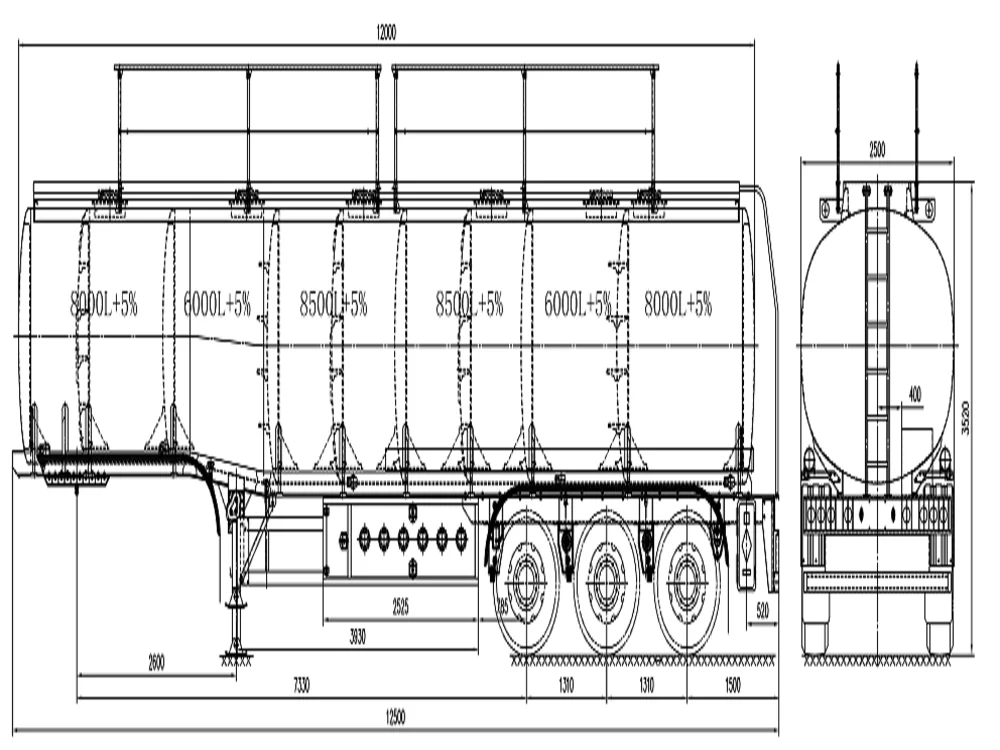
Fuel tank trailers are trailers designed specifically to carry liquid fuels such as gasoline, diesel, and lubricants. Often paired with a tractor, they are a critical link in the energy supply chain. As equipment for transporting high-risk cargo, their structural design and operating principles are centered around safety and efficiency…

17
Oct
Dropside trailers are a common type of freight trailer, capable of hauling building materials, steel, and bagged goods, making them a versatile choice. As one of the most basic trailer types, dropside trailers, with their flexible structure and wide applicability, have become a popular choice for many logistics companies and individual operators…